Strider Toll
Projects
RUSHDOWN REVOLT
Gameplay Designer & Developer
3 years (Feb. 2020 - June 2023)
Team of 31
Electric, Expressive, and combo-centric platform fighting game
Designed and implemented movesets for two original characters
Created and owned a system that assigned custom VFX to alternate skins
Built and debugged online-ready code in a game with 300+ peak players
Partnered with team leads to design and iterate on core combat mechanics

Revolunar
Lead Game Designer
4 Months (Jan. 2026 - April 2026)
Team of 10 | Mentored by Iron Galaxy
Roguelike FPS where your bullet changes with every shot
Lead the design of core game systems, combat mechanics, and player progression
Built an initial prototype of the core weapon systems in order to prove out and pitch the mechanic to team members
Designed and balanced 6 enemies with unique movement and attack patterns
Developed a modular bullet system that allowed for quick iteration on 12 weapons with custom behaviors
Regularly met with mentors at Iron Galaxy to receive feedback and further refine gameplay systems

Bucket of Bolts
Sole developer
5 Months (Jan. 2022 - May 2022)
Cooperative 2D platformer inside of a space shoot 'em up
Wrote systems for traversal across asteroids with individual fields of gravity
Created a dynamic camera system to track players that move offscreen
Ran playtests and incorporated player feedback to improve accessibility
Designed ship functions that share a control scheme with player characters
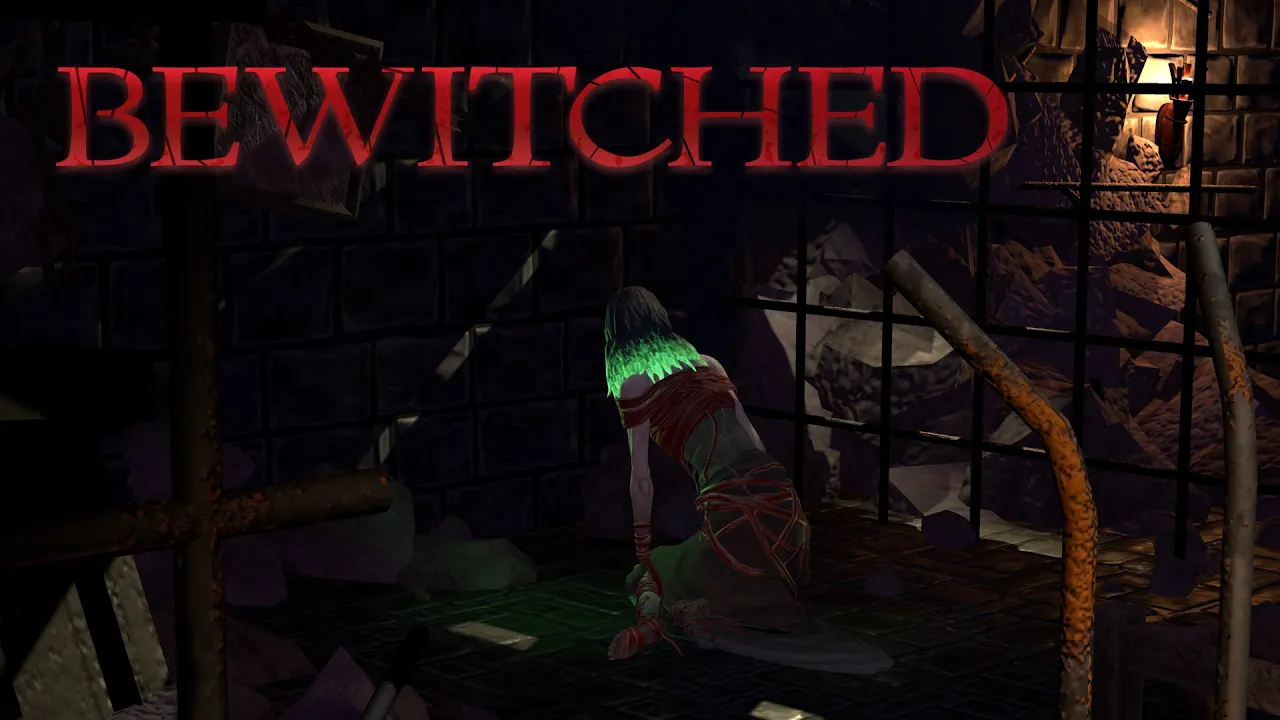
BEWITCHED
Combat Designer
3 Months (Sept 2025 - Dec 2025)
Team of 13
3D dungeon crawling action game where you possess enemies to fight
Oversaw the redesign of core combat mechanics through a transition from an isometric to 3rd person camera view
Wrote and balanced abilities for four distinct characters to create options shared between the player and AI enemies
Designed a dynamic camera system with distinct framing to improve clarity of exploration and combat
Bewitched
PROJECT BREAKDOWN
Bewitched is a single player, dungeon action crawling game where you play as a forsaken witch in a grim fantasy setting. Having limited offensive capabilities herself, the witch, Elith, must possess enemies to have them do her bidding, clearing out the hordes of danger while keeping herself protected.BACKGROUND
Bewitched was originally developed and pitched over roughly 6 weeks as part of the game design program at MSU, and was picked as one of 4 projects to move forward and receive a full semester of development. I was brought onto the team two weeks into the semester since the team needed another designer with combat systems experience.
I worked on the team as a combat designer until the game's release in December 2025.
Setting Combat Direction
With limited time to establish a proof of concept, I was tasked with setting the combat and camera direction for the rest of the team. We wanted the game to be fast paced, while keeping the player feeling challenged and vulnerable. When deciding how to achieve this vision, I started by identifying the challenges, constraints, and existing ideas inherent to the game we were already making, that the combat system would need to support or work around.
These were the most inflexible ideas I had to keep in mind when planning the combat systems:
1) Shared characters between player and enemies2) Keep the player feeling vulnerable3) Limited animation budget4) New 3rd-person camera5) Center the possession mechanic
Because the team only had one animator stretched between several different controllable characters, the number of unique attacks and hit reaction states had to be kept to a minimum. From here, we could define the core conflict of the game.
Challenge comes from
• Narrowly avoiding damage
• Managing a crowd of enemies
• Prioritizing targets
• Clever use of possession
challenge does not come from
• Complex combos and attack chains
• Precise aim
With these principles defined, we were able to move forward with refining the gameplay from the initial prototype.
Camera Setup
After setting the direction, one of my first tasks was reinventing the camera to help the game transition from its initial isometric prototype to a closer, more personal 3d view. We needed a system that allowed the player to effectively read the combat scene, without getting in the way of exploration. To solve this, I created a multi-camera system, where each playable character has one over-the-shoulder camera setup for exploration, and one wide-shot camera setup for combat encounters. We used Unity’s Cinemachine system to smoothly transition between these views as needed.

Exploration Camera - Sketch

Combat Camera - Sketch

Exploration Camera (Editor View)

Combat Camera (Editor View)


During combat, playtesters found that the need to manually control the camera distracted from the core gameplay, and made fighting enemies unnecessarily difficult. To address this concern, the combat camera was changed to automatically center the enemy that posed the most active threat to the player. This had the unexpected upshot of highlighting the final enemy in a room, eliminating the tedious process of searching for them manually.The final camera system allowed Bewitched to smoothly transition between exploration and combat, and helped players analyze and immediately understand the combat scene.
Refining the Possession System
The beating heart of Bewitched is the possession system, which allows players to leave the body of Elith, and take control of any enemy in a given scene. As the project’s signature mechanic, we knew that it needed to feel great to use, and it took a lot of work to reach the version we shipped with.Initially, possession was a manually aimed raycast, which was frustrating to use and pulled away from the fast-paced combat we wanted for the game. Players would generally possess one enemy, and stay in that form as long as possible.
Throughout development, we found that aiming possession had to become more and more forgiving. It was moved to a cone, and eventually a circular field that interpreted player intent through the left stick, ensuring that the player would capture an enemy even if their aim was imprecise. When paired with a mechanic that had the player dodge backward when leaving an enemy, players began capturing and leaving enemies multiple times over the course of combat.Over the course of many iterations, possession went from an awkward ability to a key part of combat that the player could rely on, and feel clever for using.
Rushdown Revolt
PROJECT BREAKDOWN
Rushdown Revolt is a platform fighter built around fast paced play, centering combos and player expression. The game’s signature mechanic, “SPARK” allows characters to cancel any of their attacks into a dash, leading to intricate and creative aerial combat. The project exists as a complete retooling of a previous platform fighter, Icons: Combat Arena. As such, Rushdown Revolt inherited its initial design and codebase from Icons, but with none of the original team or documentation.BACKGROUND
I was initially brought onto the project as a general game developer in early 2020. With an initially small team, my responsibilities quickly spread out to every aspect of the game, to the point where I was eventually described as “the resident all-arounder.” While I wore many hats on the project, I continually worked with the design team to make the most exciting game I could.
Character Design: Reina
Reina was the first completely original character that was created for Rushdown Revolt. An early challenge we faced was how to make her combo game interesting while in her chain whip stance. When faced with this issue during initial design discussions, I pitched a solution where close hitboxes along the length of the chain knock opponents outward, whereas tipper chain hits send in. This design resulted in a character that reinforces movement even when at range, as players try to position themselves into an ideal spacing for each move in a combo.As I implemented the VFX for Reina, I made sure that these ranges and hitboxes were clearly communicated to the players. By using a combination of dynamic weapon trails and bespoke effects from our artists, I was able to clearly separate the base hitboxes from the tipper hits.
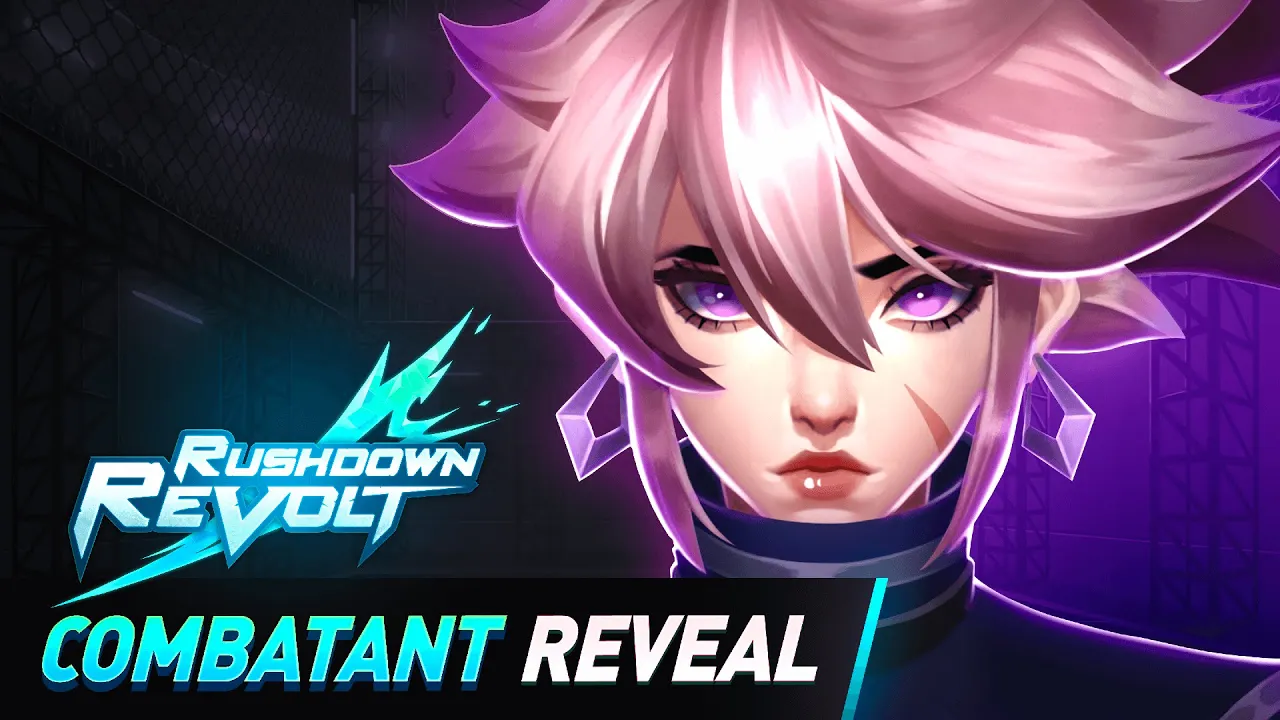
Character Design: The Torment
When initially developing The Torment, we knew we wanted a heavyweight character that was easy for new players to pick up and play in a casual environment, while creating new character specific systems that our game frequently incorporated.Pulling inspiration from characters like Susanoo from Blazblue and Ivysaur from Project: M, the design team and I created a system where The Torment levels up as he deals damage, upgrading specific moves each time. He can then use neutral special to fire a massive energy blast, which removes one level. While we had created more complicated systems for characters in the past, The Torment’s level up mechanic passively benefits the player even if they don’t specifically focus on it, removing the mental load for new players while creating interesting tradeoffs for more experienced ones.The Torment ended up being one of the most fun characters to both develop and play, and the streamlined design of the fighter provides a clear entry point for new and casual players
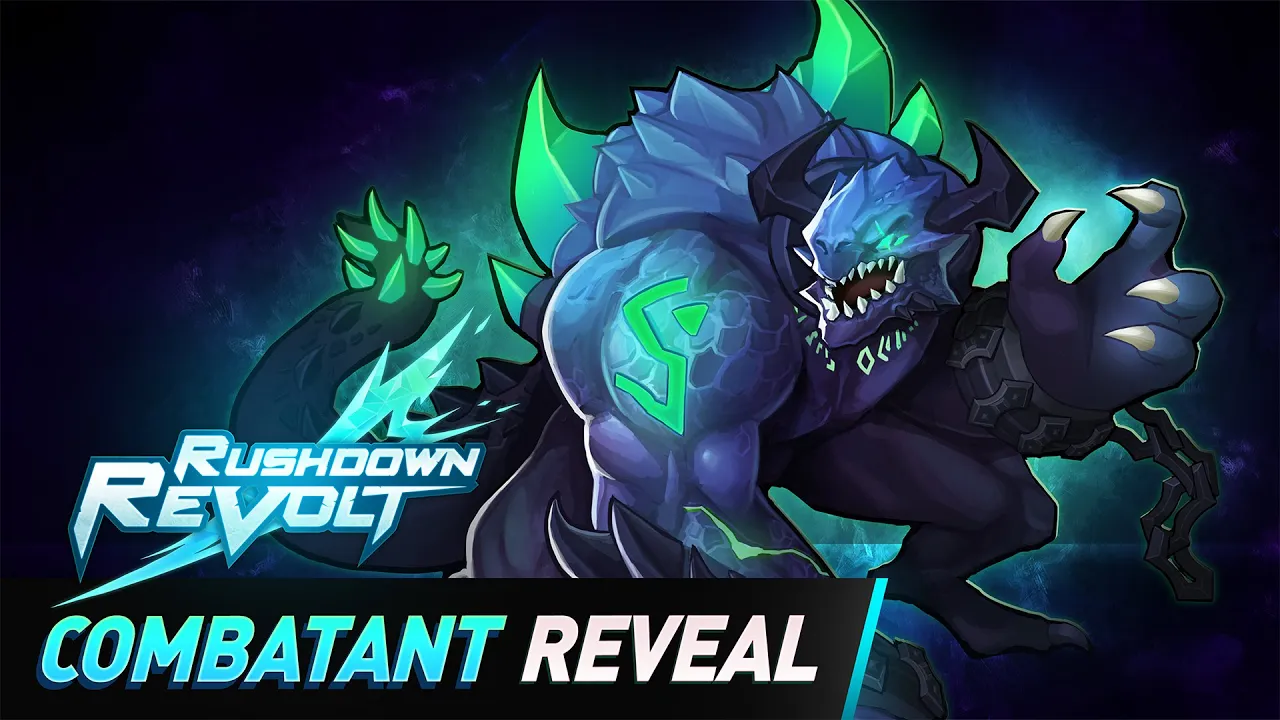
Case Study: Ledge Flipping
The ledge system was one of many pieces of design the game inherited from existing platform fighters. Initially, if a player recovering to the stage reached the edge while another player was hanging there, the recovering player would not be able grab it, and would often fall to their death. This micro-interaction played an enormous role in edgeguarding, often serving as a life-ending checkmate move.From a balance perspective, this worked fairly well, as it favored the offensive player. However, this led to anticlimactic situations where the offensive player would stop trying to attack, and would just grab the ledge, which was antithetical to the electric spirit of the game.
To address this, I pitched a solution where the recovering player would simply flip onto the stage in an inactionable state, giving the offensive player an opportunity to land an attack.This maintains the advantage state of the offensive player, but only if they continue to follow-up after the ledge flip, reinforcing the core appeal of moving and attacking. Additionally, this change gives the recovering player another chance at life, depending on their opponent’s follow-up.While ledge-flipping is a fairly small interaction, it has a huge influence in the outcome of offstage play. Because of this change, we were able to have every stock go out with a bang instead of a whimper.
Bucket of Bolts
PROJECT BREAKDOWN
Bucket of Bolts is a party game where 1-4 players must pilot a spaceship through an asteroid field by platforming between several different control panels. Each panel only affects one function of the ship, so players will need to work together and juggle roles if they want to be successful.
Over the course of a playthrough, players will need to venture outside of the ship to collect crystals that improve its functionality. If players collect five crystals and jump to lightspeed before they wreck their ship, they win the game.BACKGROUND
I created the Bucket of Bolts by myself over the course of one semester from January 2022-May 2022 as part of a capstone course.
Traversal System
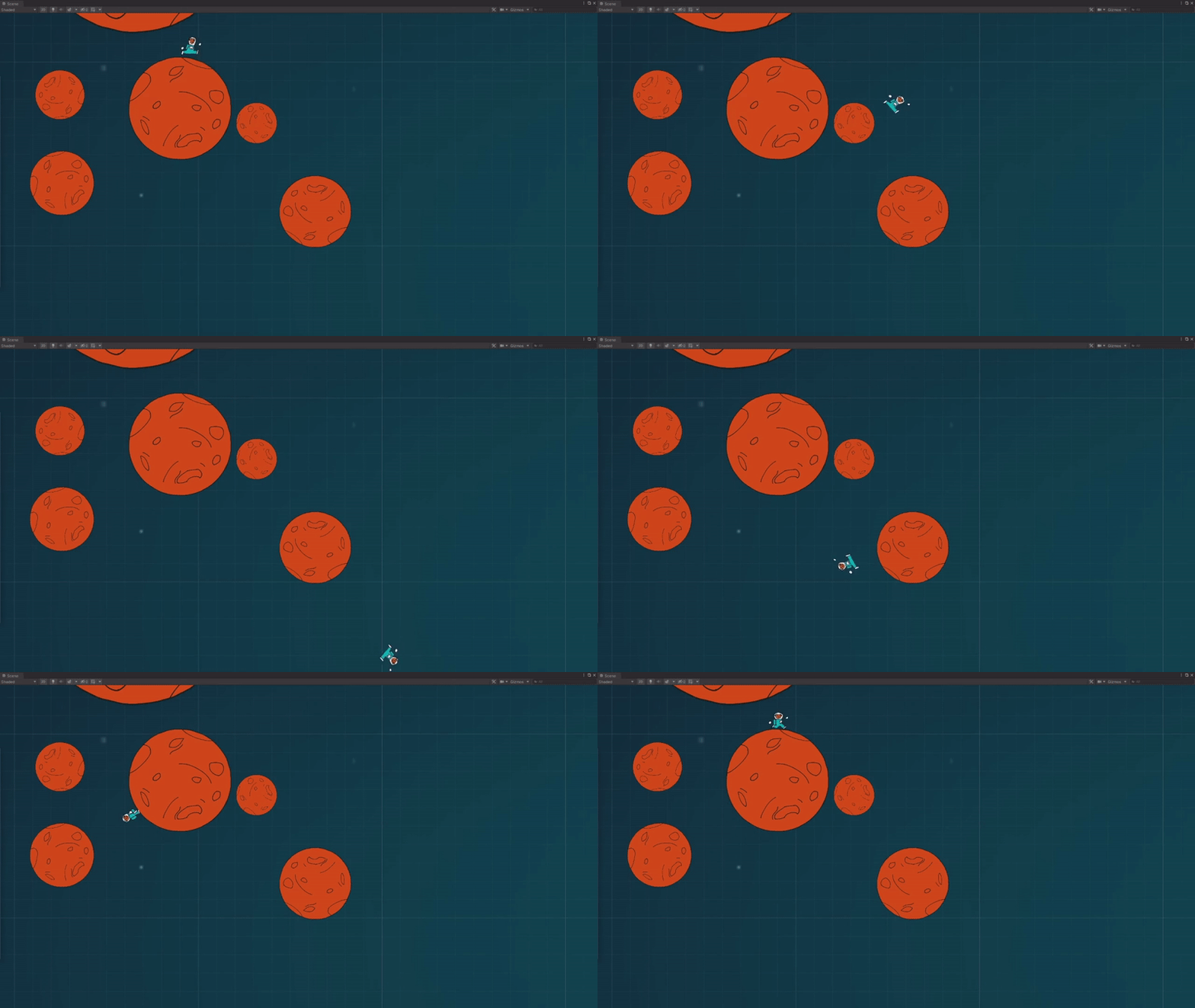
A key aspect of the game was the ability for the players to move between the ship and asteroid fields, each of which needed its own field of gravity that pulled in its own direction.To achieve this, gravity direction information is stored within a trigger collider attached to each asteroid or platforming surface that needs gravity. Both rectangular and circular gravity fields exist within the game, pulling the player towards the bottom and center of respectively. If the player is inside of multiple gravity fields, they use the gravity and orientation of whichever one they’re closest to the ground of. This way, forces do not stack, and players only need to keep track of one field at a time, which reduces the mental load for a casual game that already gives players a lot to keep track of.Additionally, if a player touches the ground surface connected to a different gravity field, their character snaps to the new surface. This allows players to move smoothly between asteroids without hiccups.Initially, the player needed to hold their movement input in the same direction the character would move in world space. This required players to constantly adjust their input to keep the character moving, which was very unintuitive, especially on keyboard. To address this problem, the game stores an initial movement direction relative to the player controller, and keeps the player moving in that direction as long as any movement input is held. The final result is a character that players can understand immediately on their first playthrough.Traversing around asteroids was able to become one of the most fun and interesting aspects of the game. In the end, the system allowed players to smoothly and intuitively move between different surfaces and gravity fields.
Revolunar
PROJECT BREAKDOWN
Revolunar is an arena based roguelike fps where the player collects and combines unique bullets into their 6-chamber revolver in order to dish out combos against their enemies.BACKGROUND
Revolunar was the final capstone project I created as part of my education at MSU. As the lead designer, I made decisions shaping every aspect of the gameplay, from the creation of the initial prototype to the final weapon implementation and balance. Over the course of the project, I had the privilege to regularly meet with developers from Iron Galaxy to recieve mentorship and feedback on the game, and I am incredibly proud of the end result.
Initial prototype
The inspiration for the game initially came from Balatro. There, I really appreciated the way that Jokers acted as tangible objects that took up space within the game world. Their activation order is a meaningful decision for the player, and old upgrades must be discarded to make room for new ones.I started looking for ways to apply these points of interaction and decision to a new genre and set of supporting mechanics.The idea that excited me the most was slotting upgrades inside of a revolver. In the same way that Jokers ping off each other in order during scoring, a player could cycle bullets in a cylinder. Bullet choice and execution order could open up new and interesting strategies that I hadn’t seen in shooters up to this point, while providing plenty of room for build creation and roguelike power scaling.

Initial weapon system documentation

I quickly built out the concept as a top-down prototype a few weeks before the start of the project to prove out the idea in a playable and readable form. To demonstrate the mechanic, I created a rotating UI component with a simple set of colored bullets with very visually distinct custom behaviors.The initial prototype for Revolunar essentially served as a playable previs for the revolver system, but with code that was scalable enough to remain into the final release. The prototype demonstrated the core mechanic clearly enough to get rest of the team excited about the idea as the project began development.
Developing Combat Mechanics
In addition to showcasing the mechanic, this initial prototype was an opportunity to create a strong technical foundation for the project. The game needed a system that programmers could expand with new behaviors, but designers could work in without touching code.To solve this, each bullet in the game exists as a scriptable object with base functionality such as movement, damage, and color. Every Bullet also contained a set of behaviors (inflicting status effects, creating objects, modifying other bullets, etc.), each with an associated trigger (Fire, Hit, Update, etc.) to execute it. This way, custom sets of behavior could be constructed for each Bullet in editor. Not only did this system allow Bullet designs to move from documentation to engine extremely quickly, but the tools that we build out gave way to new Bullet ideas, which could then be implemented with little-to-no extra code.
From the prototype onward, it was clear that the revolving load out was an exciting system to interact with, and that my job would be creating interesting contexts and supporting mechanics to make it sing. There was an urge at the beginning of production to build out a larger moveset for the player, but an ever-changing main weapon demanded a large part of the player’s attention, which in turn meant that the team had to keep other areas of the game simple.Early on, I had pushed for a depleting ammo system, believing that it would add an interesting element of tension on the player, while forcing them to use a wider variety of bullets. However, this ended up being an unnecessary level of complexity that ultimately made it too difficult for players to learn how their bullets worked. In the end, we made the call to cut the mechanic, opting for a simpler design where each bullet can be fired an unlimited number of times.
Bullets and Progression
We had an abundance of bullet ideas, many of which were prototyped to find what was fun, and build out our toolbox of behavior scripts. However, we could not afford to spend time implementing, balancing, and creating art for bullets that did not fit within the larger whole and support distinct play patterns. We needed a filter to decide what belonged in the game.To solve this, I visually mapped out the gameplay scenarios facing the player, and connected every Bullet we had written with a situation they addressed, or another Bullet they paired well with. Any bullet that could not justify its place in this ecosystem was cut. This, along with aggressive tuning to push the differences between Bullets, resulted in a rich, cohesive set of tools that created a unique experience with each run.

Bullet Ecosystem Chart

One problem that we needed to solve was a lack of understanding around what each bullet did. In early versions of the game, players started with an array of several completely random bullets, which overloaded them with information.We employed several techniques to get players comfortable with their ever-changing arsenal. First, we slowed the rate at which players gain new bullets. Players now started out with 3 basic hitscan attacks, and one random Bullet from the larger pool. This allowed them to learn how one new tool worked with the support of a reliable baseline. We also implemented a bullet select screen, which gave players active control over their build direction, as well as a calm moment to read the Bullet descriptions.
We also sorted bullets into a couple tiers of rarity, so that the Bullets that were foundational to a build would show up more often than the more complex and powerful options.
COMMON Bullets were meant to be a reliable set of tools that players familiar with the 90s shooters would already be familiar with, allowing them to focus on our new and unfamiliar systems. These required very little custom tooling, so we could focus on making them distinct and fun to use.
UNCOMMON Bullets were primarily designed as pieces to pair with other Bullets, creating combos and suggesting new Bullets to take. In-chamber effects, or Bullets that applied modifiers to later Bullets, were an especially successful design pattern that we utilized here with Mother Flame and Blank.
RARE Bullets were reserved for out most powerful and experimental effects. These tended to require the most mental consideration from players, interacting with exterior systems like health. Hiker is a particular favorite here, flipping loadout strategy on its head by stacking damage at the end of the chamber.
After we made the changes to progression and introduced rarity, players became much more experimental with their bullet layouts as they understood how each combo piece worked individually. In playtest, I would often observe players rubbing their chin as they thought about which bullets to take and how they order them, which is exactly the feeling we were going for.
Boost Breakers
PROJECT BREAKDOWN
BOOST BREAKERS is a fast-paced 2D platform fighter designed around high-speed movement, stylish combos, and reckless offstage plays.DESIGN GOALS
-This project was developed on-and-off as a long-term solo project from roughly October 2019 - July 2021, with the goal of creating a vertical slice featuring one stage, and one character. As such, the system mechanics and character, Azen, were created to support each other.
Boost Breakers
Sole developer
October 2019 - July 2021
Competitive 2D platform fighter
Designed and balanced a character moveset around a theme of wild confidence
Developed movement and combo systems inspired by anime fighters
Created system mechanics to incentivize stylish, high-risk high-reward gameplay